

Posts Similares

Exploring the Fascinating World of Exoplanets
What are Exoplanets? Exoplanets, also known as extrasolar planets, are planets that orbit stars other than our own sun. These planets are extremely difficult to detect because of their small size and the distance between them and Earth. However, the recent advancements in technology have made it possible to detect these exoplanets using several techniques,…
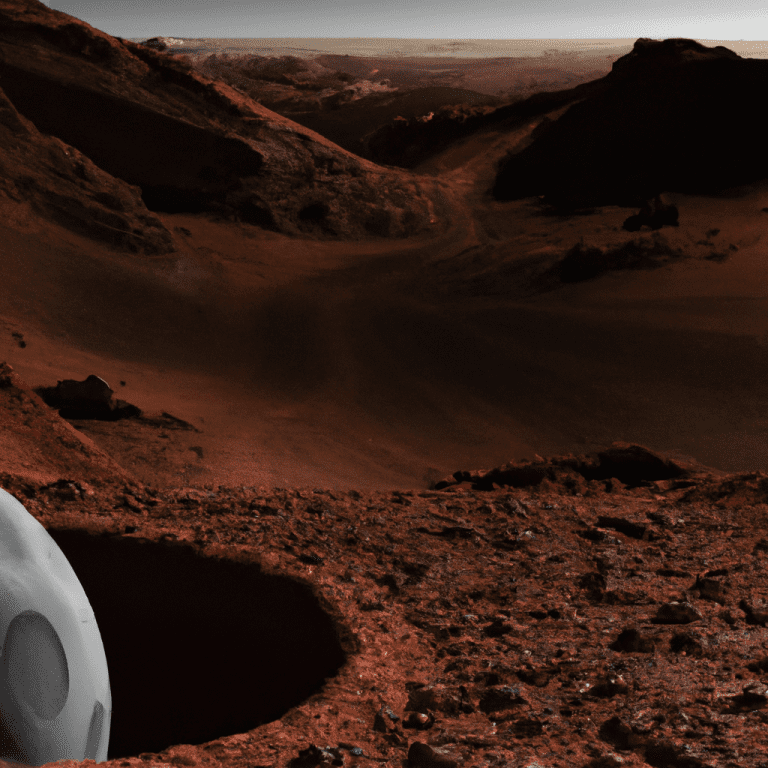
Exploring Mars: The Search for Life
Introduction For decades, scientists have been fascinated by the mysteries of Mars. The red planet has always been a subject of curiosity among humans, and the possibility of life existing on it has fueled the imagination of many. The search for extraterrestrial life has been one of the most important missions for space agencies around…

Unraveling the Mysteries of the Universe
The Wonders of Space Since the dawn of time, humans have looked up at the stars in awe. The vast expanse of the universe has always fascinated us, and we have been constantly trying to unravel its mysteries for centuries. From the ancient Greeks and Egyptians to the modern-day scientists, we have come a long…

An Introduction to Starts, Galaxies and Planets
What are Starts? Stars are huge spheres of glowing hot gas, shining brightly in the darkness of space. They are formed by the contraction and compression of the hydrogen gas clouds in the universe. There are around 100 billion stars in our Milky Way galaxy alone, and each stellar body is unique in its characteristics,…

Exploring Outer Space: An Introduction to Stars, Galaxies and Planets
What are Stars? Stars are massive celestial bodies made up of hot plasma. They are the building blocks of galaxies and emit light and heat across the universe. Some of the brightest stars include Sirius, Canopus and Alpha Centauri. Scientists use the study of stars to learn more about the origins and behavior of the…

Advancements in Space Robotics
The Future of Exploration Space exploration has been at the forefront of human technology for decades. As technology advances, so does the capabilities of space travel and exploration. One key area of advancement within this field is space robotics. Robotic Usage in Space Robots have been used in various space missions since the 1960s and…